
 English
 Pусский
 Tiếng Việt
 Монгол


XRT Intelligent Dry Mineral Processing Equipment for Enhanced Efficiency
The mining and mineral processing industry is under increasing pressure to improve operational efficiency, reduce environmental impact, and enhance product quality. Traditional wet separation methods, while effective, are resource-intensive, relying heavily on water and energy, and generating significant slurry waste. The XRT Intelligent Dry Mineral Processing Equipment offers a transformative solution by enabling precise, high-efficiency dry separation of minerals, minimizing water usage, and optimizing recovery rates. This article provides a comprehensive overview of the equipment’s technology, performance, structural design, operational considerations, and its role in modern mining operations.
Industry Background and Market Demand
Global demand for minerals continues to grow, driven by industrial expansion, renewable energy technologies, and infrastructure development. As mining operations scale up, companies face challenges in resource conservation, operational cost management, and compliance with stricter environmental regulations. In regions where water scarcity is an issue, wet processing methods are not only costly but also environmentally unsustainable.
The adoption of dry processing technologies has become a strategic priority for mining operators. Equipment like the XRT Intelligent Dry Mineral Processing Equipment allows mines to increase throughput, improve recovery rates, and reduce the ecological footprint of mineral separation processes. As environmental regulations tighten and energy efficiency becomes a key performance indicator, dry mineral processing solutions are increasingly preferred in large-scale and precision-focused operations.
Core Concepts and Key Technologies
The XRT Intelligent Dry Mineral Processing Equipment employs advanced dry separation principles that utilize differences in particle density, size, and magnetic properties. Its core technologies include:
Vibration-Assisted Separation: High-frequency vibration induces stratification, enabling dense minerals to separate from lighter gangue materials.
Intelligent Control System: Real-time monitoring adjusts operational parameters such as vibration amplitude, airflow, and feed rates to optimize recovery and product quality.
Airflow-Assisted Sorting: Controlled air streams remove fine, lightweight impurities, ensuring cleaner end-product and minimal material loss.
High-Precision Sensors: Integrated sensors detect variations in ore composition, allowing adaptive control and maintaining consistent separation efficiency.
These technologies collectively ensure high recovery rates, low operational cost, and adaptability to different mineral types and particle sizes.
Product Structure, Performance, Materials, and Manufacturing
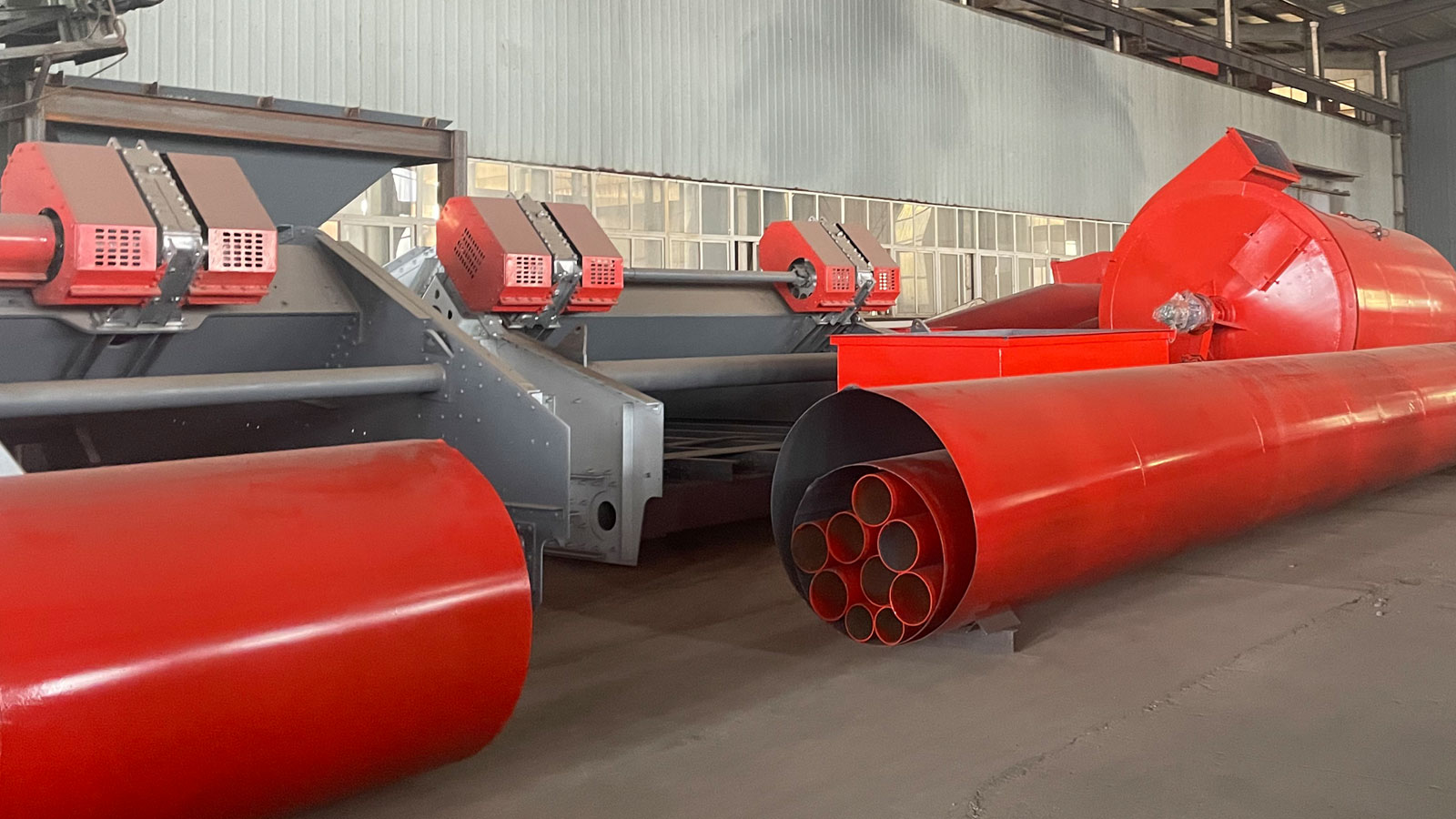
The XRT equipment is engineered for durability, precision, and ease of operation.
Separation Deck: Constructed from wear-resistant steel and specialized coatings, the deck handles abrasive minerals and ensures long operational life.
Vibration Mechanism: Designed with high-precision bearings and reinforced frames, the vibration system delivers consistent stratification while minimizing maintenance needs.
Airflow and Dust Control: Integrated ducts and collection units maintain a clean working environment, reduce airborne particles, and enhance worker safety.
Control Interface: Operators can adjust vibration frequency, airflow, and feed rate through a user-friendly interface, enabling flexible adaptation to various ores.
The manufacturing process emphasizes high-quality machining, rigorous testing under operational loads, and material treatment to withstand harsh mining environments. The modular design allows easy integration into existing processing lines and facilitates maintenance and component replacement.
Key Factors Affecting Quality and Performance
Several factors influence the performance of XRT Intelligent Dry Mineral Processing Equipment:
Particle Size and Distribution: Uniform particle sizes optimize separation, whereas extreme size variations may require parameter adjustments.
Feed Rate: Overloading reduces separation efficiency, while underfeeding limits throughput.
Ore Composition and Moisture: Variations in mineral density, hardness, and residual moisture can affect recovery rates, requiring real-time parameter tuning.
Vibration and Airflow Settings: Proper calibration is essential to balance mineral recovery and purity.
Environmental Conditions: Dust, humidity, and temperature influence equipment performance and may necessitate environmental controls.
Supply Chain and Vendor Selection Criteria
Selecting a reliable supplier is critical for achieving operational success:
Equipment Reliability: Suppliers must provide wear-resistant, long-life components suitable for continuous operation in harsh conditions.
Technical Support: Availability of spare parts, maintenance services, and technical assistance ensures minimal downtime.
Customization Capability: Vendors offering adjustable equipment configurations allow optimization for specific mineral types and operational scales.
Proven Track Record: Suppliers with experience in deploying intelligent dry processing systems demonstrate higher reliability and better ROI.
Common Industry Challenges
While dry processing offers numerous benefits, challenges exist:
High Initial Investment: Capital costs are higher than conventional wet systems, though operational savings offset this over time.
Maintenance Requirements: Continuous vibration and abrasive material handling require regular inspection and preventive maintenance.
Feed Variability: Ore inconsistency may necessitate frequent recalibration of operational parameters to maintain efficiency.
Applications and Industry Use Cases
The XRT Intelligent Dry Mineral Processing Equipment is suitable for:
Large-Scale Mining Operations: High-throughput capabilities allow efficient processing of bulk ore.
Water-Scarce Regions: Enables dry mineral separation where water availability is limited or costly.
High-Purity Mineral Production: Achieves precise separation for industrial-grade minerals, including rare metals and specialty ores.
Mining Plants Integration: Compatible with existing processing lines, allowing retrofitting or expansion without major redesigns.
Current Trends and Future Developments
The future of dry mineral processing focuses on automation, sustainability, and energy efficiency.
Automation and Data Integration: Real-time monitoring, AI-assisted adjustments, and predictive maintenance enhance efficiency and reduce downtime.
Energy Optimization: Advanced motor technologies and airflow design reduce power consumption while maintaining high throughput.
Environmental Compliance: Dust and waste control technologies are becoming standard, aligning operations with regulatory and sustainability goals.
Modular and Scalable Designs: Equipment is evolving to allow flexible deployment across varying operational scales and ore types.
Frequently Asked Questions
How does the XRT Intelligent Dry Mineral Processing Equipment differ from wet systems?
It operates without water, reducing environmental impact and operational costs while maintaining high separation efficiency.
Can it handle multiple mineral types simultaneously?
Yes, the equipment is adjustable for different particle sizes, densities, and mineral compositions, enabling versatile processing.
What are the main operational benefits?
Enhanced recovery rates, reduced energy consumption, minimal water usage, and improved product quality.
Conclusion
The XRT Intelligent Dry Mineral Processing Equipment represents a significant advancement in modern mineral processing. By combining intelligent control, dry separation technology, and durable design, it delivers higher recovery rates, energy efficiency, and environmental benefits. For mining operators seeking cost-effective, sustainable, and high-precision mineral processing solutions, the XRT equipment offers a reliable and future-ready investment, supporting large-scale operations and contributing to the evolution of intelligent mining practices.



 Whatsapp
 Teléfono
Comentario
(0)