

The industrial processing sector, particularly mining and aggregate production, faces increasing pressure to balance productivity, energy efficiency, and consistent product quality. With rising demand for construction materials, metals, and industrial minerals, operators require equipment capable of handling large volumes while maintaining precise separation. Screening solutions remain central to this challenge, ensuring that raw material flows are effectively classified before downstream processing. The Energy-Efficient SXJ Series Large Banana Screen for Industrial Applications addresses these requirements by combining high capacity with operational reliability and energy-conscious design.
Modern industrial operations confront multiple pressures: fluctuating commodity prices, stricter environmental standards, and the need to optimize throughput without excessive energy expenditure. Aggregate producers, supplying sand, gravel, or crushed stone, must achieve consistent particle size distribution to meet ASTM, EN, or local construction standards. Mineral processors, handling ores such as iron, copper, or industrial minerals like limestone, require effective screening to separate fines, middlings, and oversize fractions, ensuring efficient downstream processing and material quality. Large banana screens have emerged as a preferred solution due to their ability to increase effective screening area while maintaining compact equipment footprints.
A banana screen differs from traditional flat-deck screens through its segmented, curved deck design. This geometry accelerates material flow at the feed end and gradually reduces velocity toward the discharge end, enhancing particle stratification. Heavier and finer materials separate more efficiently, improving throughput and screening accuracy. The Energy-Efficient SXJ Series Large Banana Screen for Industrial Applications achieves this balance through precision-engineered vibration mechanisms, optimized stroke lengths, and adjustable frequency settings, enabling operators to adapt to variable material properties.
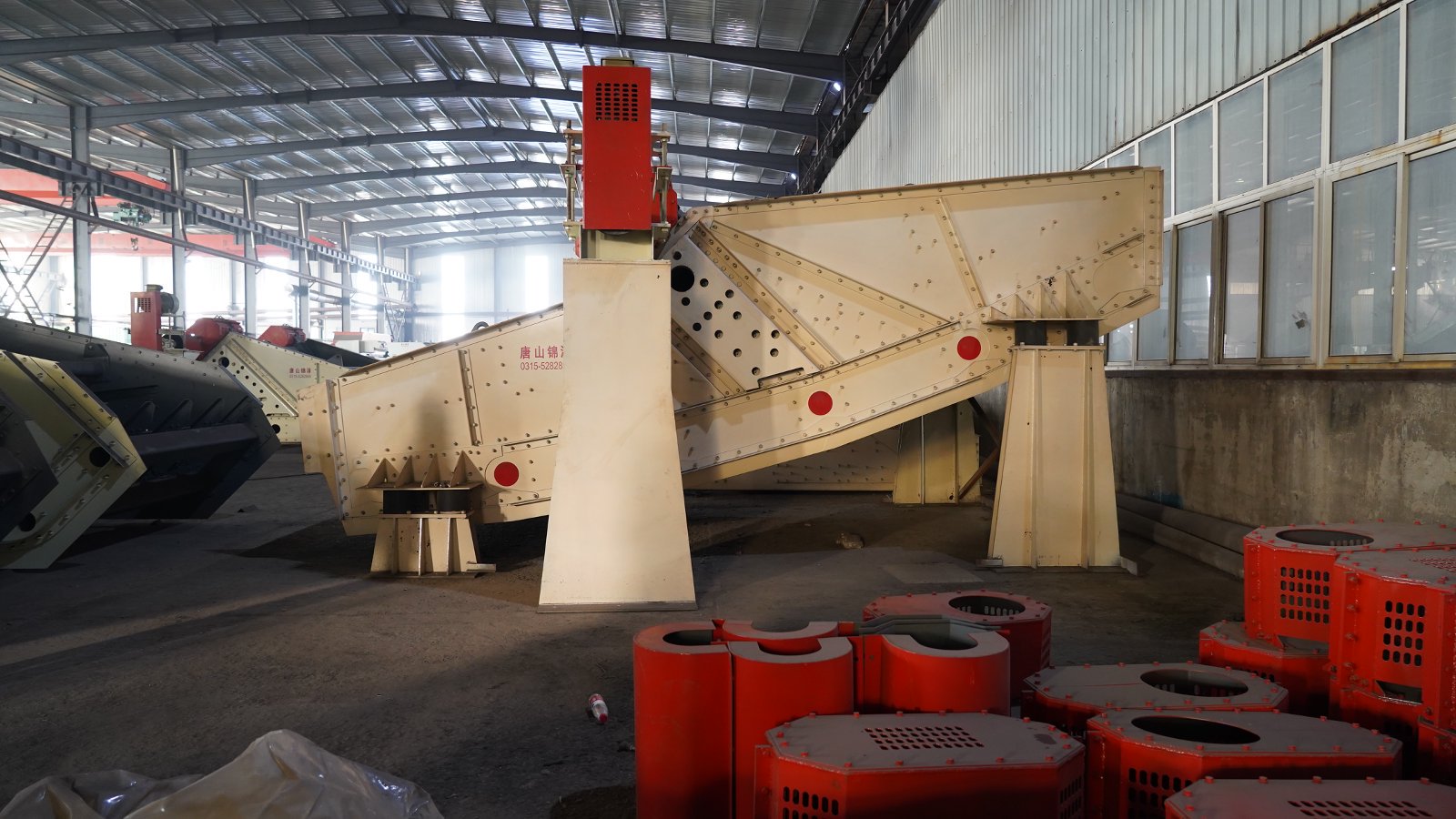
Durability and performance stem from the structural design and material selection. The SXJ series employs a robust welded steel frame to withstand heavy loads and minimize deflection. Deck panels are constructed from high-wear materials, such as manganese steel or polyurethane, selected according to material abrasiveness and operational conditions. Manufacturing precision is critical: CNC fabrication, robotic welding, and laser alignment ensure consistent curvature and deck tolerances, maintaining effective screening performance. Sealed bearings and oil-lubricated drive assemblies further enhance operational reliability and reduce maintenance requirements.
Several factors influence the efficiency and lifespan of large banana screens:
Feed Distribution: Uneven material feed causes localized blinding and reduces effective screening area. Proper feed chute design and adjustable dispersion plates are essential.
Screen Media Selection: Media type affects open area, wear resistance, and cleaning frequency. Choosing the correct media for the material type improves service life.
Vibration Settings: Stroke length and frequency must be matched to material properties. Excessive vibration can cause particle rebound, while insufficient motion reduces throughput.
Environmental Conditions: Moisture, temperature, and dust levels impact flow characteristics. Anti-blinding devices or coatings may be necessary for wet or sticky materials.
Systematic commissioning ensures that these variables are optimized for sustained performance.
Selecting a reliable supplier is crucial for equipment longevity and operational efficiency. Key considerations include:
Technical Support and Field Services: Rapid response networks reduce downtime and ensure spare part availability.
Engineering Documentation: Detailed manuals, vibration profiles, and structural analysis reports facilitate integration with existing processing lines.
Quality Certifications: Compliance with ISO 9001 or equivalent standards signals consistent manufacturing practices.
Customization Options: Suppliers capable of adjusting deck dimensions, motor specifications, and vibration parameters provide tailored solutions for specific operational needs.
Operators frequently encounter issues such as:
Blinding and Pegging: Fine or sticky materials can clog screen openings, lowering throughput. High-frequency, low-amplitude vibration and curved deck design help mitigate this.
Excessive Wear: Abrasive materials accelerate deck and frame wear. Selecting appropriate media and using protective liners extends operational life.
Maintenance Accessibility: Poorly accessible drive assemblies or bearings increase maintenance time and safety risk. Designs prioritizing accessibility reduce labor and downtime.
Addressing these challenges requires careful design, routine inspection, and proactive maintenance planning.
The SXJ series finds applications across mining, quarrying, and industrial processing. In aggregate production, it separates coarse rock from sand and gravel fractions. In mineral beneficiation, it serves as a pre-scaler to remove fines before grinding, enhancing mill efficiency. A European quarry operation reported a 20% throughput increase after integrating the Energy-Efficient SXJ Series Large Banana Screen for Industrial Applications, while reducing oversize material carry-over and meeting customer specifications consistently.
Emerging trends in industrial screening emphasize energy efficiency, digital monitoring, and predictive maintenance. Sensors embedded in screening units provide real-time vibration and load analysis, enabling operators to anticipate wear and schedule preventive maintenance. Variable frequency drives adjust vibration parameters based on feed characteristics, reducing energy consumption. Advanced composite materials for screen panels extend service life while minimizing weight. These innovations signal a shift toward more intelligent, adaptable, and sustainable screening solutions.
Q: What distinguishes a banana screen from a flat deck screen?
A: Banana screens have a curved, multi-slope deck that enhances particle stratification, increasing screening efficiency without expanding the equipment footprint.
Q: How is the proper screen media selected?
A: Selection depends on material abrasiveness, particle size, moisture content, and desired open area. Common options include punched plate, wedge wire, and polyurethane panels.
Q: Why is vibration frequency critical?
A: Correct frequency ensures effective particle movement, reduces rebound, and maximizes separation, while also minimizing wear and energy consumption.
Tel : +86-315-5282855
E-mail : jinzexuanmeijixie@gmail.com
Address : 1.6 km south of Xinjichang Road,
Tangshan City, Hebei Province, China

Copyright © 2017.Company name All rights reserved.More Templates


Este sitio web utiliza cookies para garantizar que obtenga la mejor experiencia en nuestro sitio web.

 English
 Pусский
 Tiếng Việt
 Монгол



 Whatsapp
 Teléfono