
 English
 Pусский
 Tiếng Việt
 Монгол

Dry Jigging Mineral Processing
Dry Jigging in Mineral Processing Dry jigging is an innovative and environmentally friendly mineral processing technique that separates particles based on density differences without the use of water. Unlike traditional wet jigging, which relies on water as a medium, dry jigging utilizes air pulsation and vibration to stratify materials, making it particularly suitable for arid regions or applications where water conservation is critical. Principles of Dry Jigging The process involves feeding raw ore onto a perforated deck or screen, where controlled air pulses and mechanical vibrations create a fluidized bed. The lighter, low-density particles rise to the top, while the heavier, high-density particles settle at the bottom. Adjusting parameters such as air pressure, vibration frequency, and feed rate optimizes separation efficiency. The stratified layers are then discharged separately, producing concentrated products and tailings. Advantages 1. Waterless Processing: Eliminates the need for water, reducing environmental impact and operational costs associated with water treatment and disposal. 2. Energy Efficiency: Consumes less energy compared to wet methods, as it avoids pumping and dewatering steps. 3. Compact Design: Dry jigs are often smaller and simpler than wet systems, reducing infrastructure requirements. 4. Versatility: Effective for processing coal, iron ore, manganese, and other minerals, especially in dry or remote locations. Challenges - Particle Size Limitations: Works best with coarse to moderately fine particles; ultrafine materials may require additional air classification. - Dust Control: Proper dust suppression systems are necessary to maintain air quality and worker safety. - Feed Uniformity: Consistent feed density and size distribution are critical for optimal performance. Applications Dry jigging is widely used in coal beneficiation, where it removes shale and other impurities. It also shows promise in recycling (e.g., electronic waste) and processing industrial minerals. Ongoing research aims to expand its use in finer particle separation and more complex ore types. Conclusion As sustainability becomes a priority in mining, dry jigging offers a viable alternative to traditional wet methods. Its ability to operate without water, lower energy consumption, and adaptability to various ores positions it as a key technology for future mineral processing. Further advancements in airflow control and dust management will enhance its efficiency and applicability.
Producto
Categoría:
-
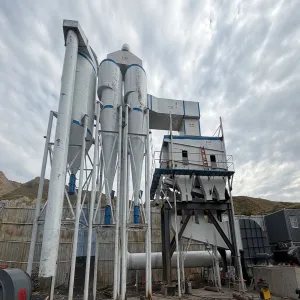
KQT-C Dry Jigging Technology for Precision Mineral Separation
Su clasificación: KQT-C Dry Jigging Mineral Processing EquipmentVistas: 14Número:Tiempo de liberación: 2025-12-26 17:54:23The KQT-C Dry Jigging Technology for Precision Mineral Separation offers an advanced solution for separating minerals with unmatched accuracy and efficiency. Utilizing air pulses and vibration, this technology relies on the density differences between materials, enabling precise sorting without the need for water. Ideal for various mineral processing applications such as coal, iron ore, and rare earth element recovery, the KQT-C system significantly enhances recovery rates while reducing environmental impact. By eliminating water use and reducing operational costs, this technology presents a sustainable, cost-effective alternative for modern mining operations focused on optimizing resource extraction and improving performance.
Noticias
Categoría:
-
[industry]KQT-C Dry Coal Preparation Jig for Enhanced Coal Processing...
2025-12-27 14:48:54
Caso
Categoría:
¡Sin resultados de búsqueda!
Video
Categoría:
¡Sin resultados de búsqueda!
Descargar
Categoría:
¡Sin resultados de búsqueda!
Reclutamiento
Categoría:
¡Sin resultados de búsqueda!
Productos recomendados
¡Sin resultados de búsqueda!



 Whatsapp
 Teléfono